| Material | Abachi |
| Length (mm) | 2400/ 2700/ 3000 |
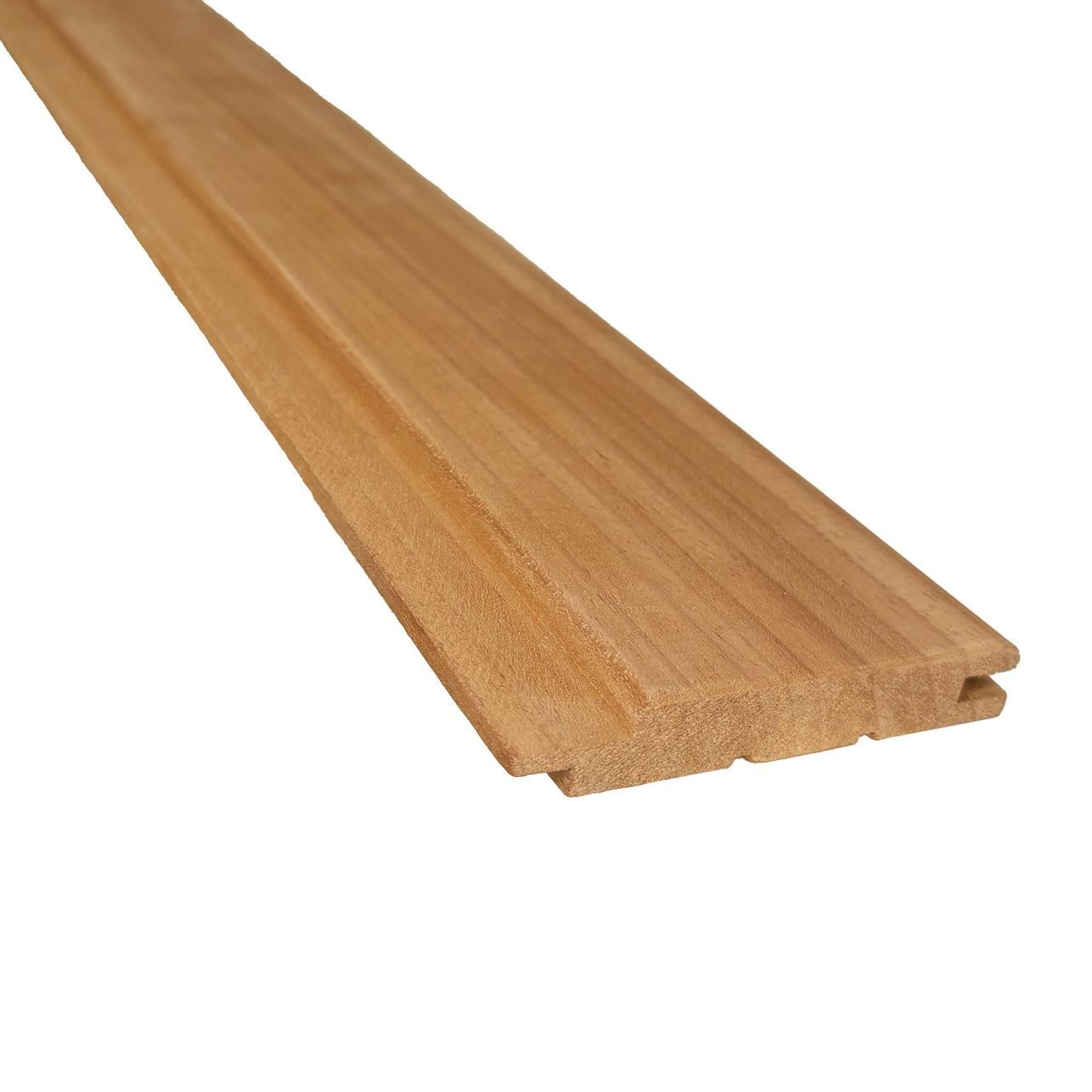
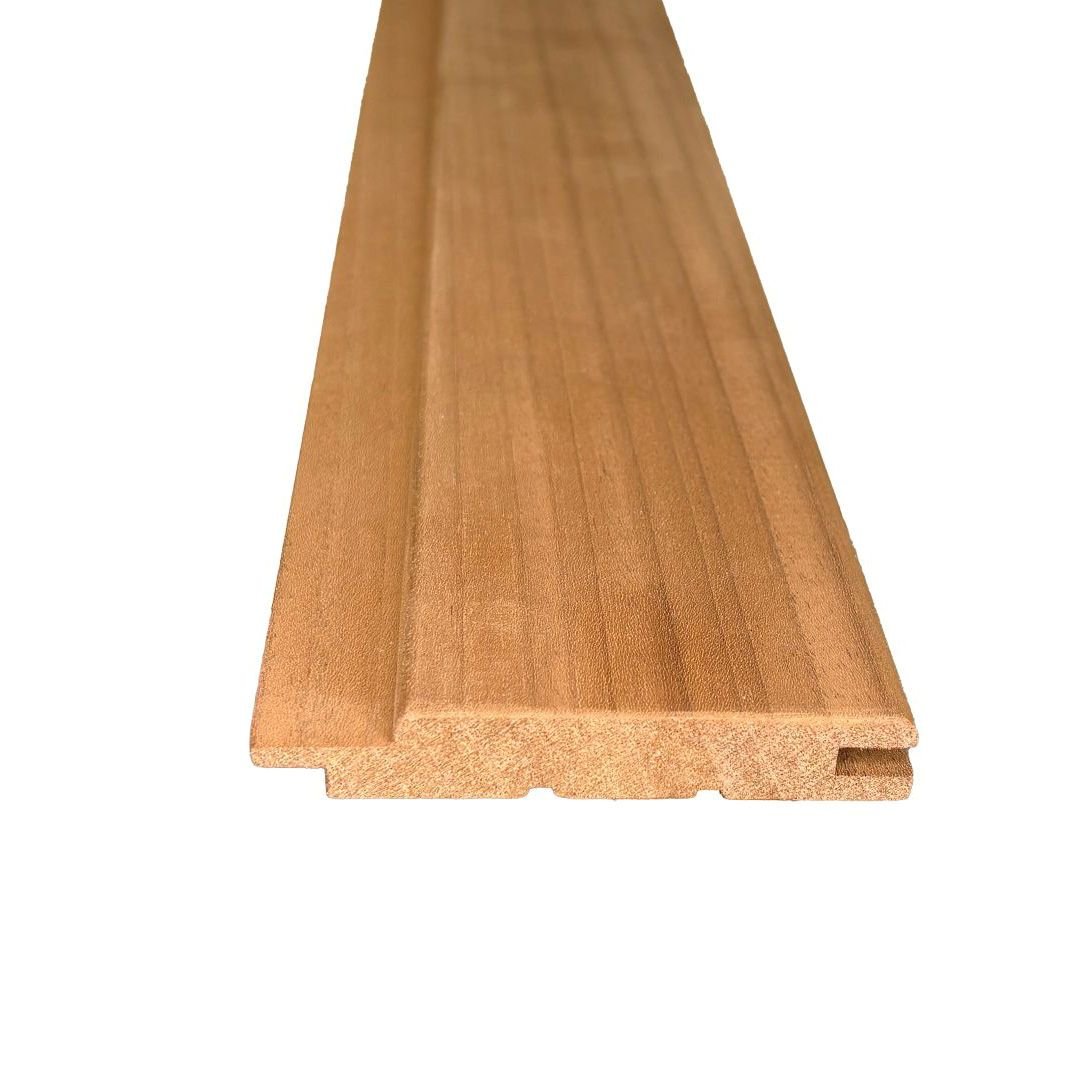
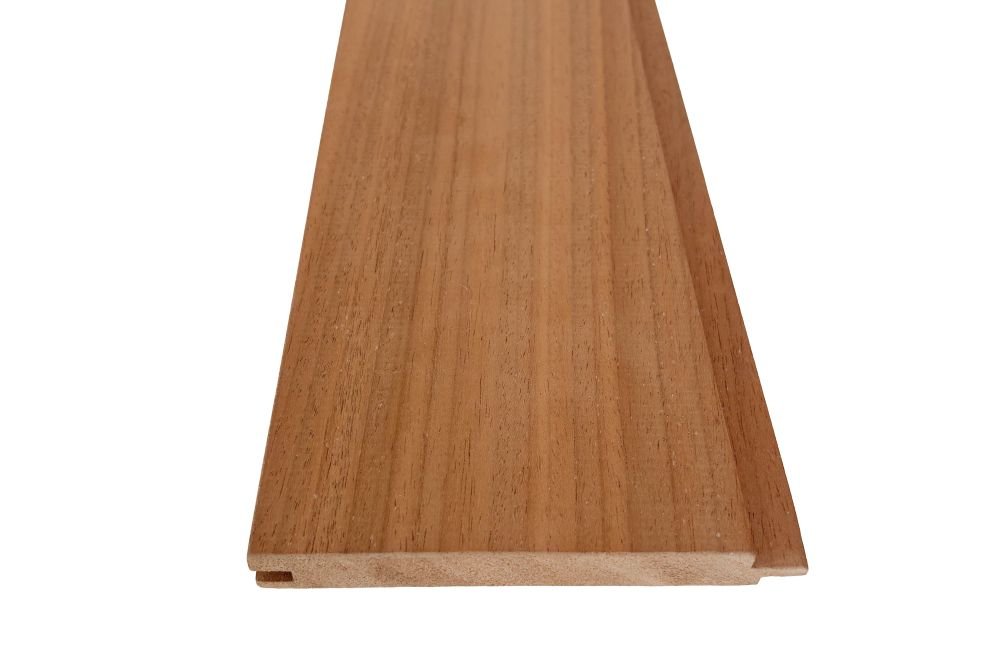
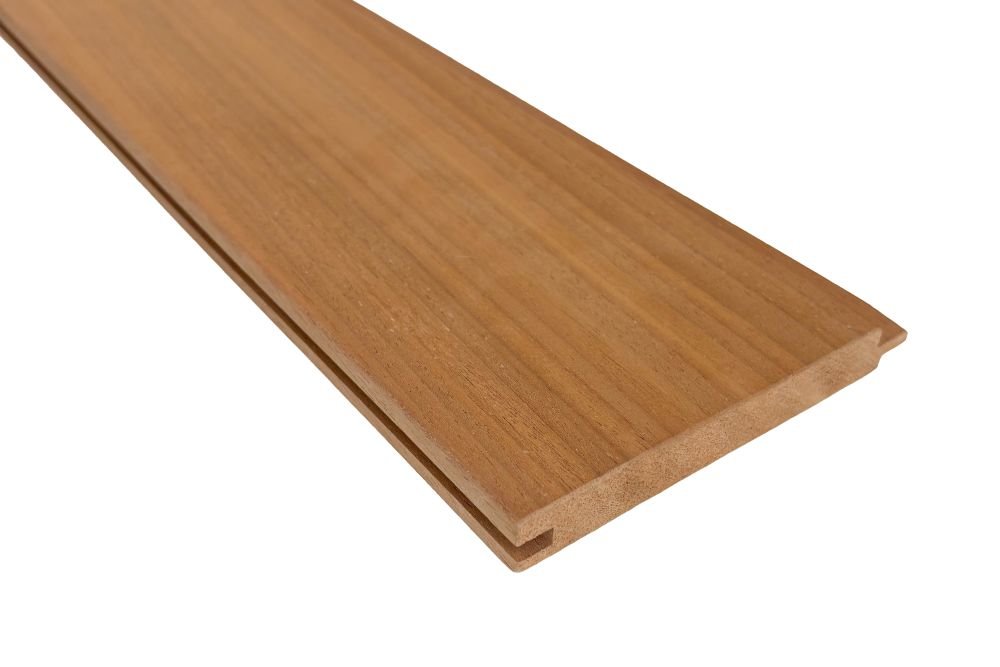
| Profile | Softline profile STP, STS |
| Dimensions |
15 × 90 mm 15 x 120 mm |
| Length (mm) | Profile | |
| 2400 / 2700 / 3000 | 15 x 90 mm STP | 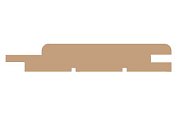 |
| 2100 / 2400 / 2700 / 3000 | 15 x 120 mm STS |  |
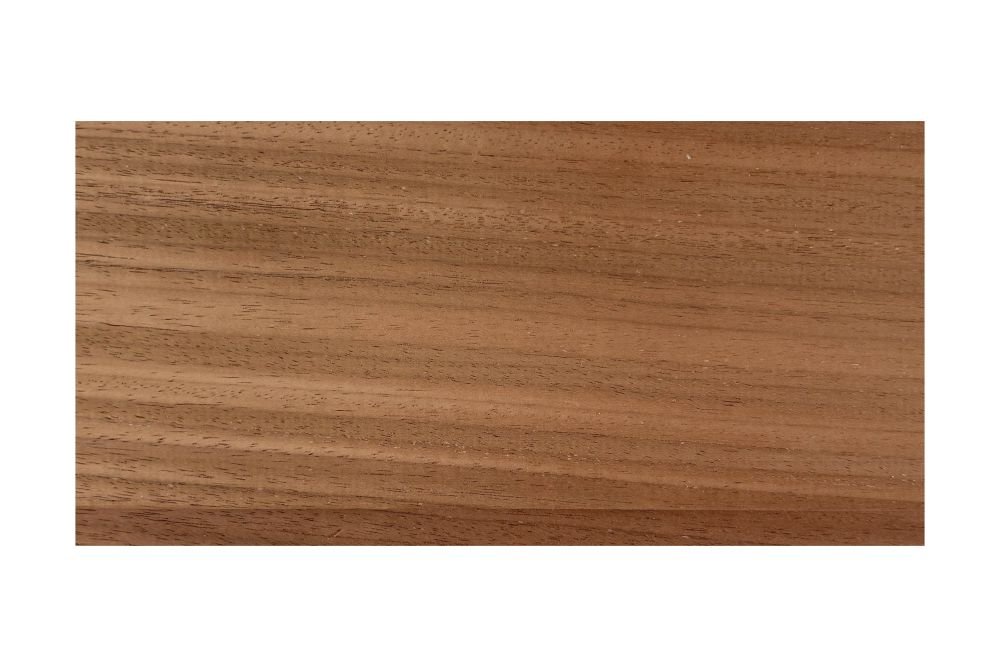
Abachi is a tropical tree native to Africa. This material feels pleasant to the touch and has a beautiful,
smooth, and fine texture. Its subtle growth rings and wood that is almost knot-free make it an attractive
choice for your sauna project. The main characteristic of abachi is its low thermal conductivity,
meaning it does not heat up significantly through the depth of the wood. Its key advantage lies not only
in the fact that abachi benches do not heat up to the ambient temperature (for example, in a hot sauna),
but above all in the fact that they very quickly adapt to the body temperature of the person sitting on
them. Abachi has excellent thermal insulation properties (when the sauna temperature is 90–110 °C,
the surface temperature of an abachi bench does not exceed 40 °C).
Thermo Abachi sauna wood offers a high standard of processing together with a longer service life
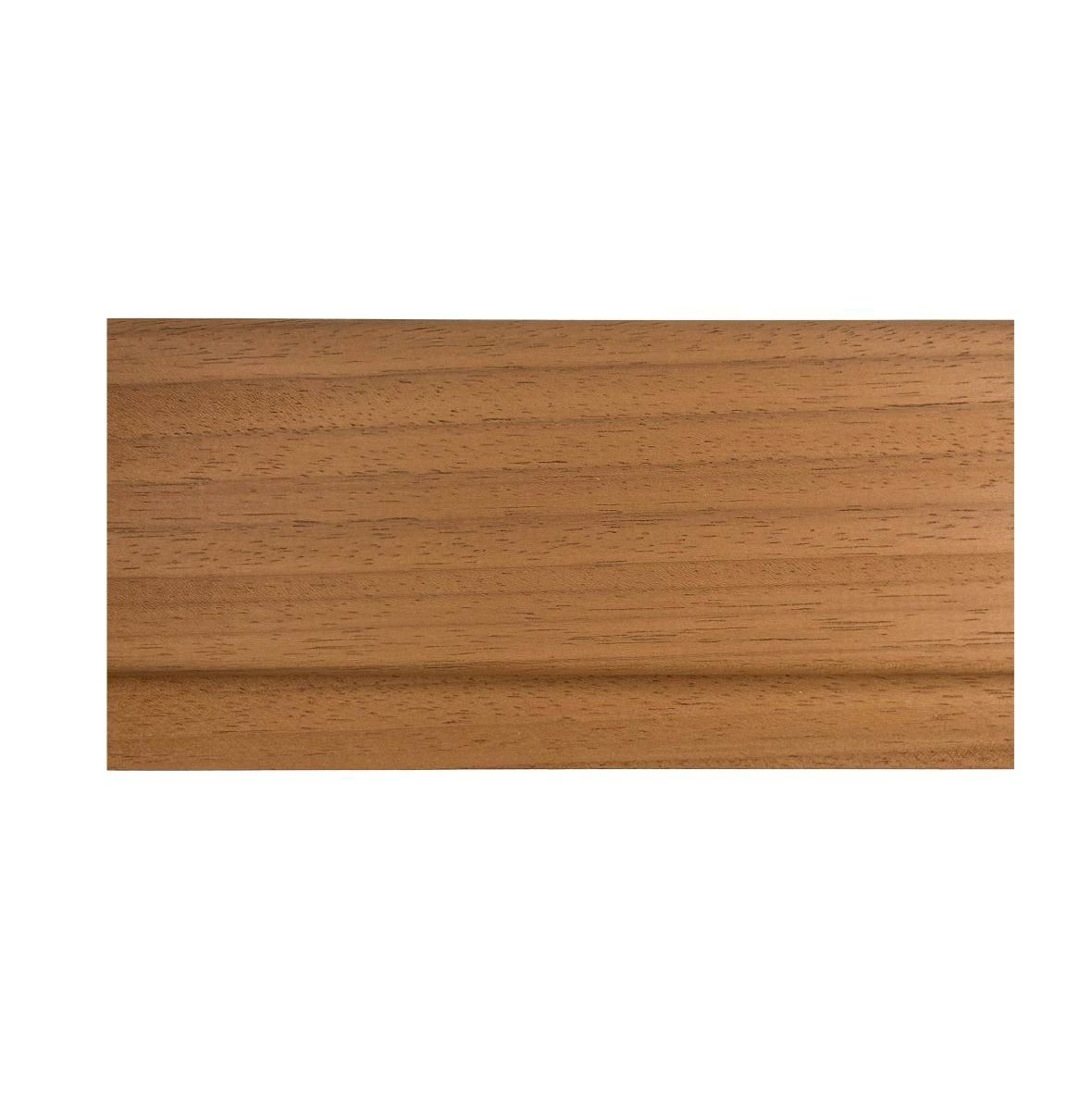
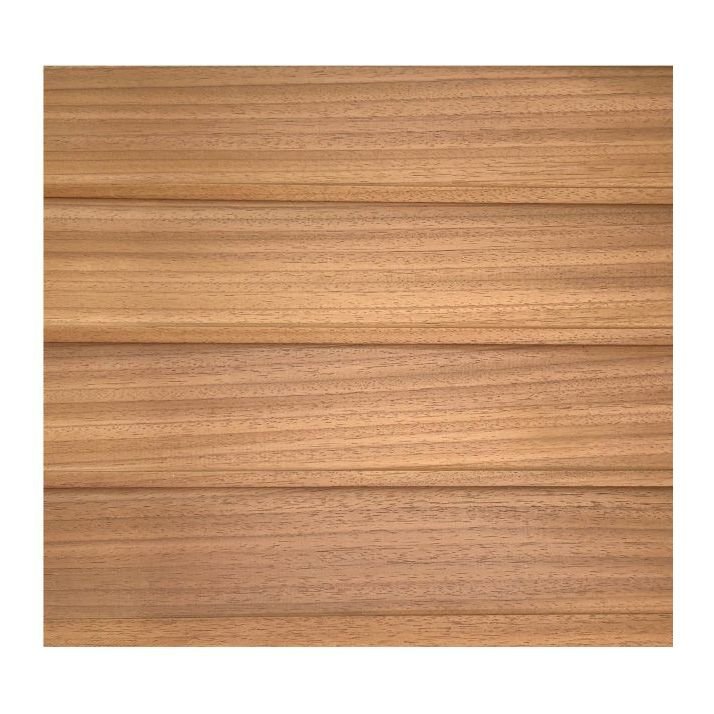
even in the demanding sauna environment. It has a fine and uniform structure. The dark cream color
is usually consistent across the entire surface of the wood. The surface remains pleasant even at high
sauna temperatures and does not burn the skin.
Thermally modified Thermo Abachi wood is completely natural – the thermal modification process is
carried out using only heat and steam, which makes the wood more durable and stable. This thermal
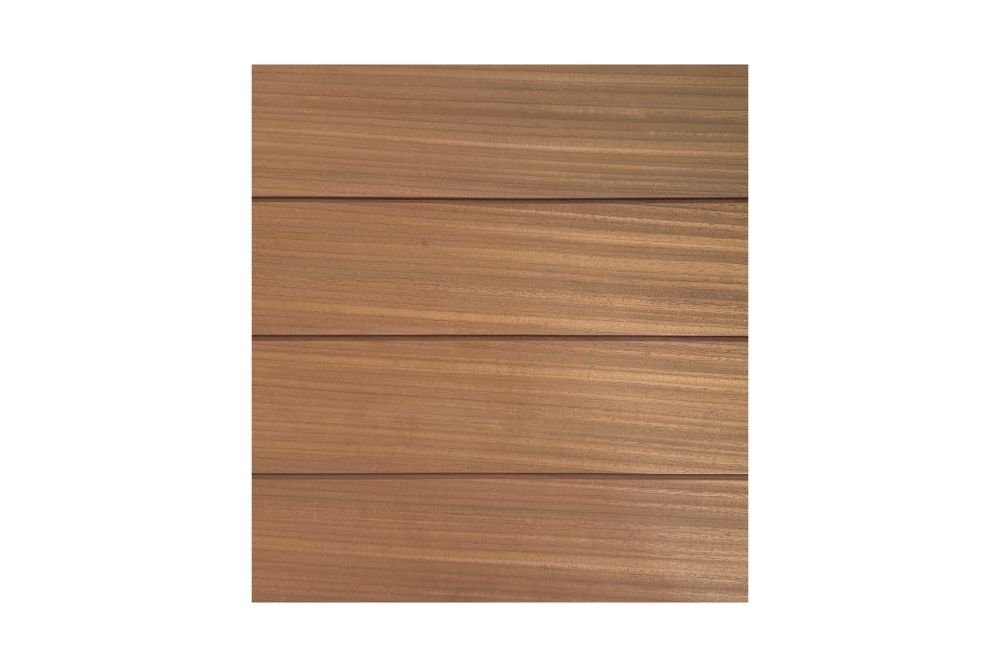
treatment creates an attractive darker brown shade of the wood. We offer it as softline-profile cladding
boards with an extended tongue, which visually eliminates the natural dimensional changes of wood
caused by humidity variations, as well as planed boards used as bench profiles.
Tropical West Africa. Main producing countries: Cameroon, Nigeria, Côte d’Ivoire, and Ghana.
White spots may occur in Thermowood Abachi wood.These spots are mineral deposits, primarily
consisting of silica (silicon dioxide) or calcium oxalate crystals. They are often referred to as „mineral
streaks“ or „silica pockets“ within the wood parenchyma.Abachi is a tropical species that grows in
mineral-rich soils. As the tree grows, it absorbs minerals through its root system along with water.
These minerals travel through the sapwood and eventually crystallize within the cellular structure.
These deposits are not a defect or a sign of disease. They are part of the wood‘s DNA, acting as a
natural indicator of the tree‘s origin and growth conditions.
When the timber is dried or undergoes the Thermowood (thermal modification) process, the moisture
evaporates, leaving behind these concentrated mineral solids, which become much more visible
against the darkened, heat-treated wood.
They serve as proof of the wood‘s authenticity and natural tropical origin.
These spots have no impact on the structural integrity, durability, or strength of the Abachi planks.
They do not interfere with the adhesion of oils or stains. However, because they are inorganic
minerals, they do not „absorb“ pigment like wood fibers do, which is why they remain visible even after
oiling.
Since they are embedded deep within the fiber, they cannot be „sanded away.“ They should be
embraced as a part of the natural aesthetic of the material.