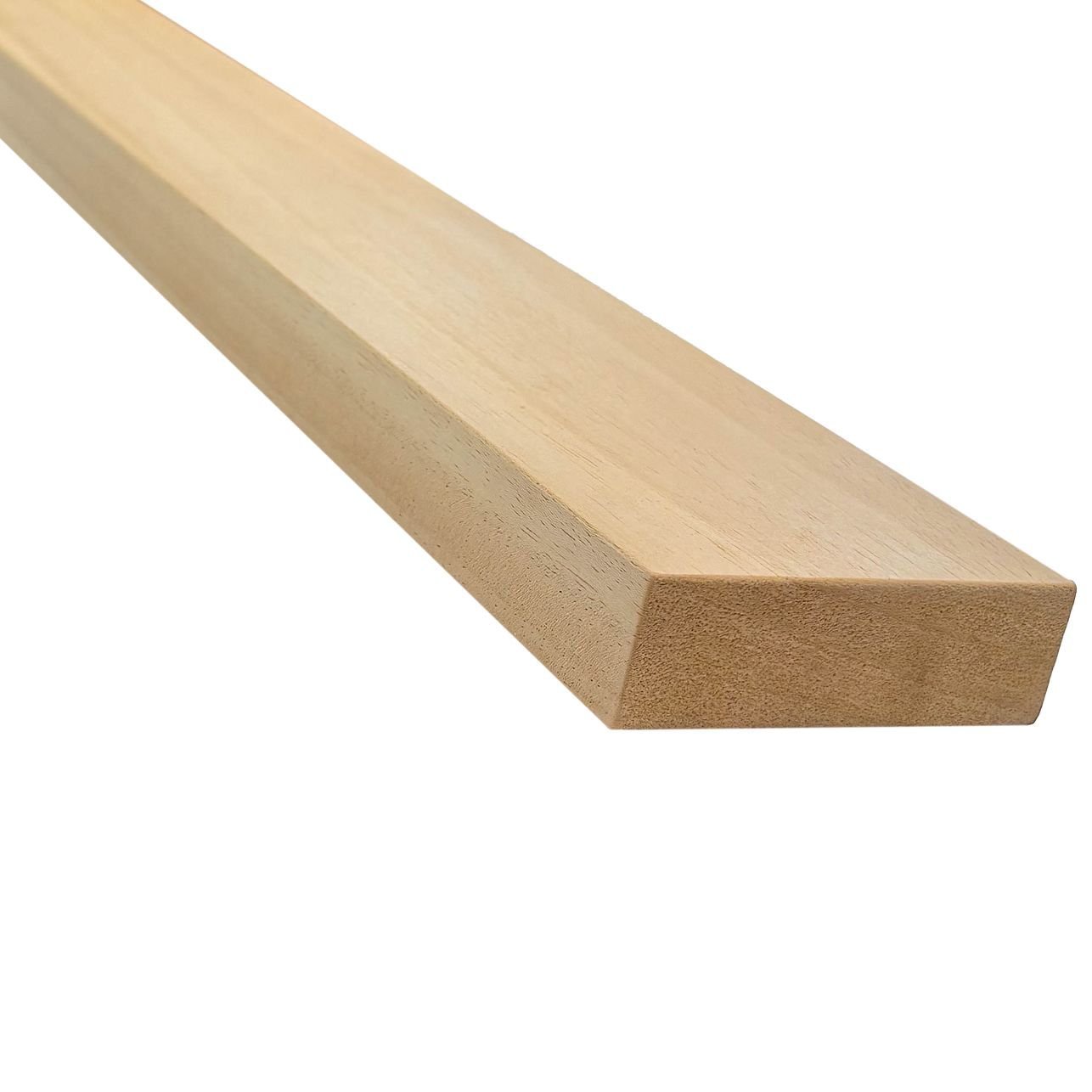
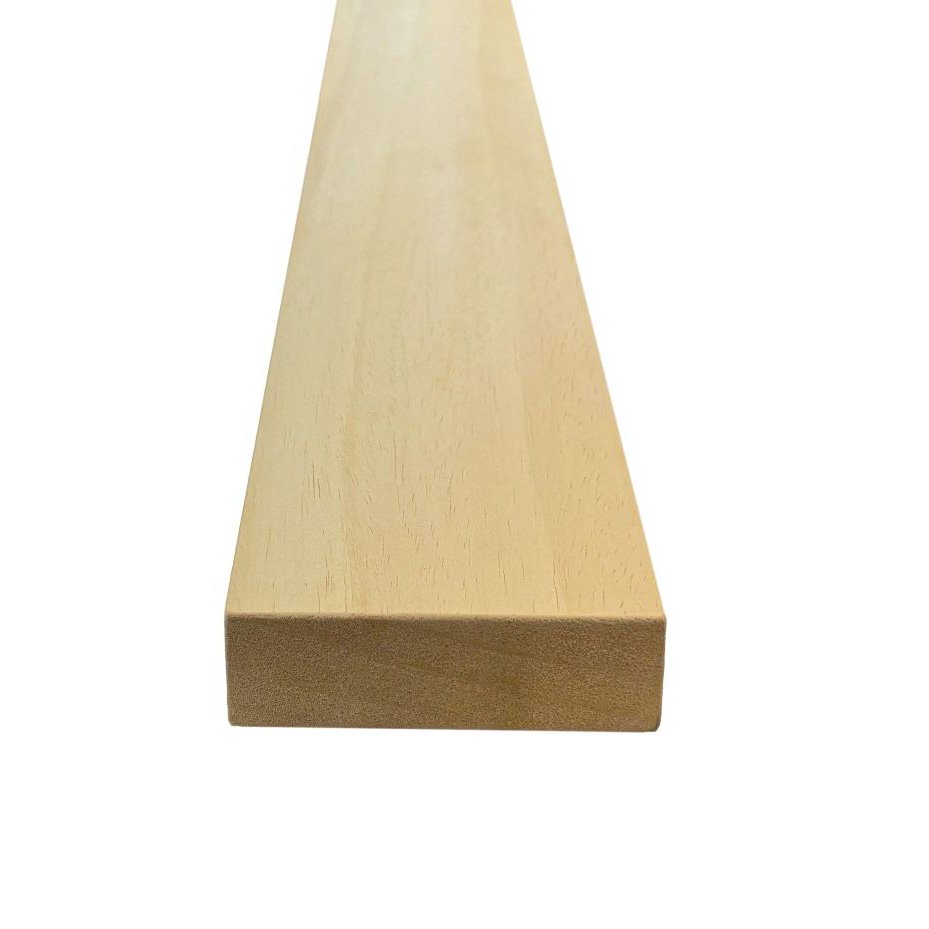
| Material | Abachi |
| Length (mm) | 2400/ 2700/ 3000 |
| Profile | SHP |
| Dimensions |
28 × 90 mm |
| Length (mm) | Profile | |
| 2400 / 2700 / 3000 | 28 × 90 mm SHP |  |
Abachi wood is a suitable material for saunas. It has several unique properties that make it ideal for
sauna benches as well as for wall cladding. It is valued for its low weight, which makes it easy to
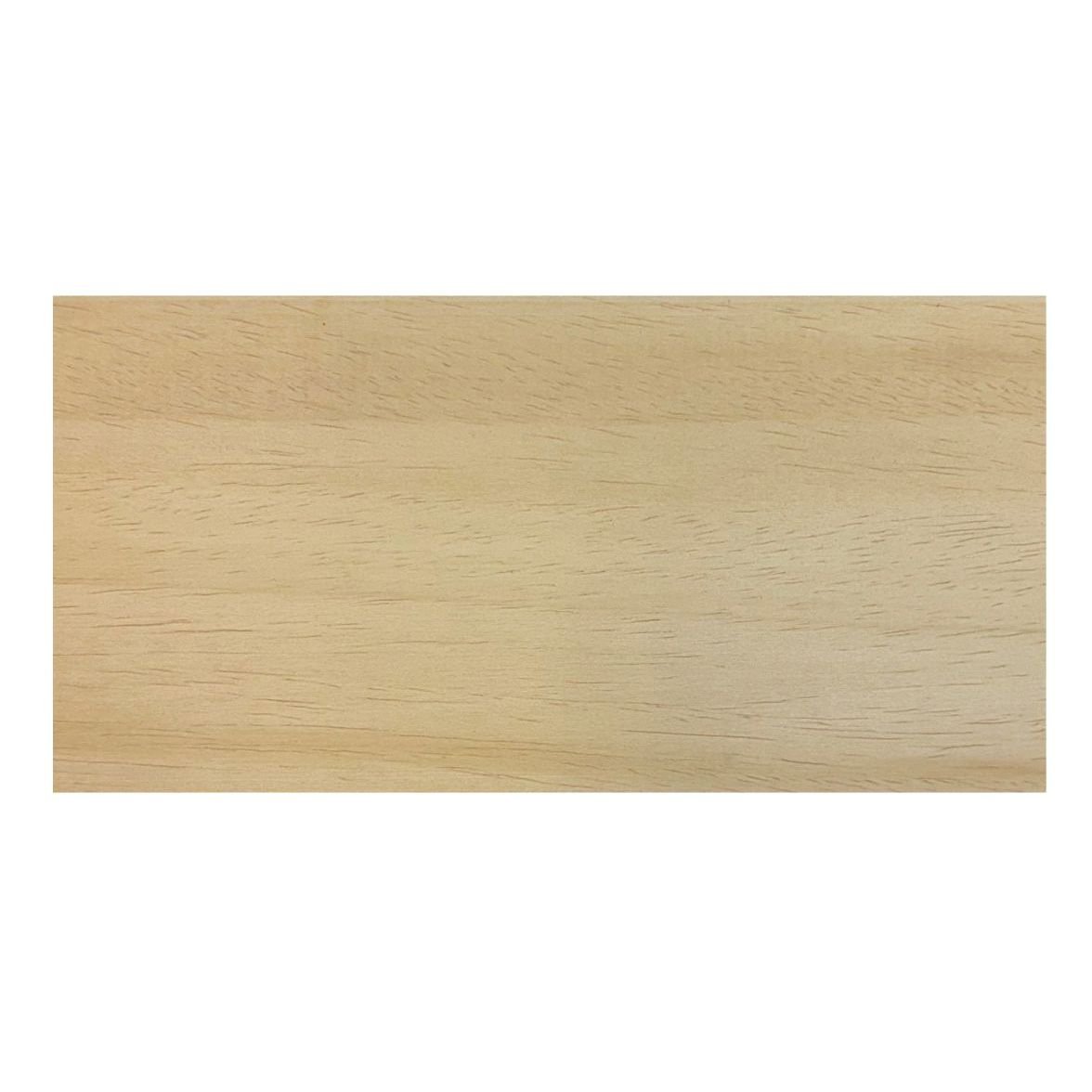
handle. The wood has a light, almost white color and shows little color variation. Fresh heartwood is
whitish to creamy yellow and, when exposed to light, turns into a golden-yellow shade. There is no
pronounced difference between sapwood and heartwood. The color and quality of abachi may vary
depending on its origin.
On the cross section, large individual vessels are visible along with diffuse parenchyma tissue, while
the tangential section shows a layered structure. The wood grain is straight to interlocked. Interlocked
grain creates faint to fairly pronounced striping on the radial surface.
The main characteristic of abachi is its low thermal conductivity, and it does not heat up significantly
through the depth of the wood. Its main advantage lies not only in the fact that abachi benches do not
heat up to the ambient temperature (for example, in a hot sauna), but above all in the fact that they
very quickly adapt to the body temperature of the person sitting on them. Abachi has excellent thermal
insulation properties (when the sauna temperature is 90–110 °C, the surface temperature of an abachi
bench does not exceed 40 °C). The surface remains pleasant even at high sauna temperatures and
does not burn the skin.
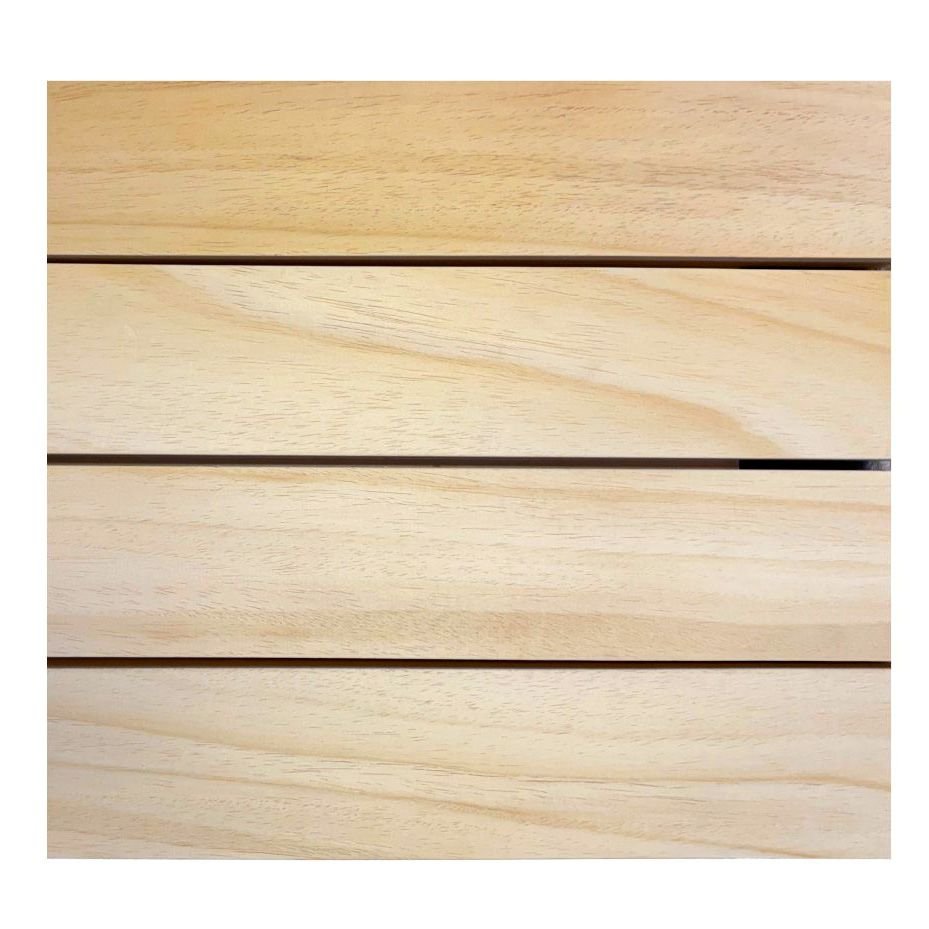
We offer abachi as softline-profile cladding boards with an extended tongue, which visually minimizes
the natural dimensional changes of wood caused by humidity fluctuations, as well as planed boards
used as bench profiles.
Tropical West Africa. Main producing countries: Cameroon, Nigeria, Côte d’Ivoire, and Ghana.